

At 5:00 AM, the jungle is still pitch black. Guided by the beam of our headlamps, we stepped into a wooden catamaran and crossed the placid water to a concealed, elevated observation blind positioned just fifty meters opposite an exposed clay wall known as the Blanquillo Collpa.
Why Do Macaws Eat Dirt? The Science of Geophagy
For decades, naturalists puzzled over why large parrots risk predator attacks from ocelots and harpy eagles to ingest mineral soil. Research conducted in the southwestern Amazon confirmed that clay licks serve two critical dietary purposes:
During the dry season, wild fruits become scarce, forcing macaws to feed on unripened seeds and fruits containing toxic alkaloids. The fine clay particles coat the birds’ gastrointestinal tract, binding to chemical toxins and rendering them harmless. Additionally, the clay provides essential sodium and minerals that are otherwise virtually nonexistent in the Amazonian ecosystem.
The Unfolding Drama at the Cliff Face
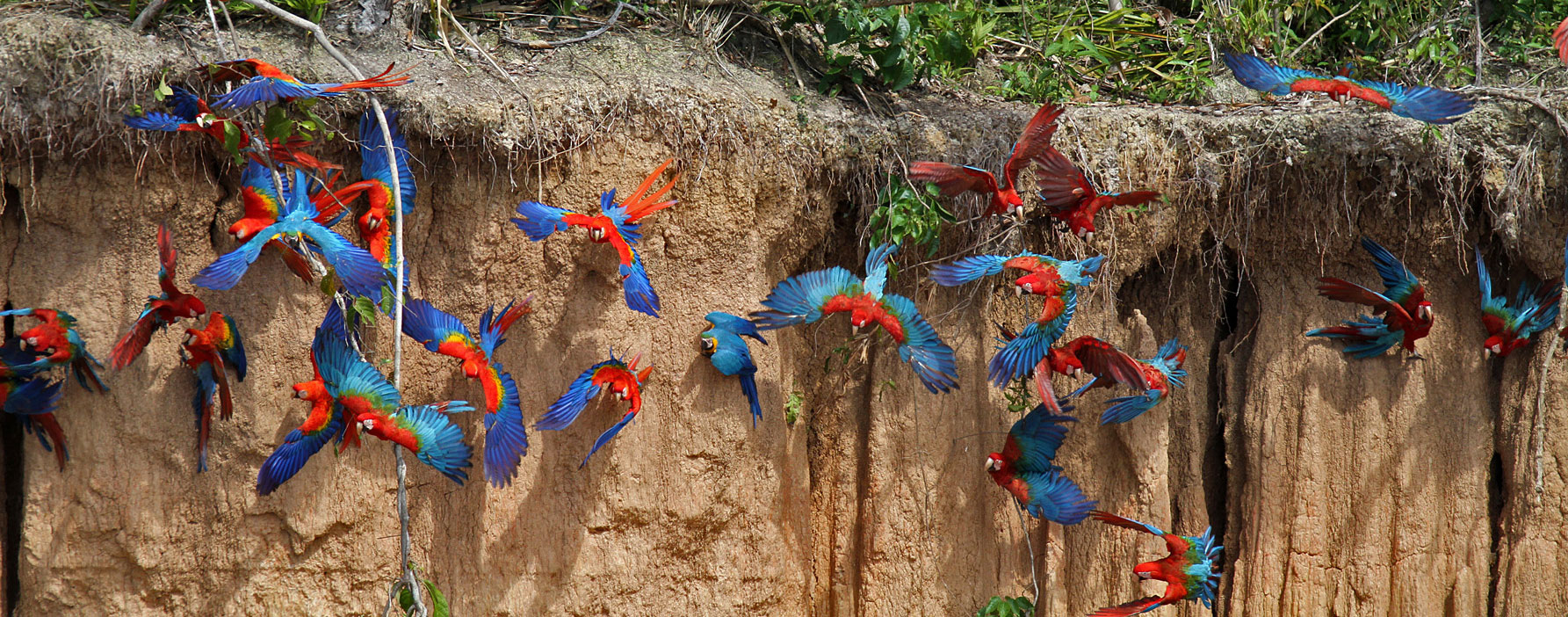
The show unfolds in distinct, nervous stages. First come the green parakeets and mealy parrots, swirling through the canopy with piercing screeches, testing the safety of the perimeter. If no raptors appear, dozens of birds descend in quick fluttery bursts to the cliff edge.
Around 7:00 AM, the true stars arrive: Scarlet Macaws (Ara macao) and Red-and-Green Macaws (Ara chloropterus). In mated pairs that fly wingtip-to-wingtip, these massive birds circle overhead in iridescent flashes of crimson, sapphire, and gold before carpeting the red clay face in vibrant plumage.
Observer Etiquette at the Collpa
- Total Silence in the Blind: Whispering and sudden movements can spook the sentry parrots, causing the entire flock to abandon the lick for the day.
- No Flash Photography: Natural morning light is optimal for telephoto photography; artificial flash is disruptive and strictly banned.
- Binoculars & Spotting Scopes: Lodges provide mounted high-power spotting scopes that allow you to observe fine feather details and social squabbles on the cliff face.
Booking Your Clay Lick Experience
The Blanquillo clay lick is accessible on 5 to 7-day expeditions to Manu. For photographers and wildlife enthusiasts, spending two consecutive mornings in the blind ensures optimal lighting conditions and unforgettable memories of South America’s most celebrated avian spectacle.