


Ninety percent of the animal species in the Amazon rainforest live in the canopy layer—the sunlit ceiling thirty to forty-five meters above the ground. Standing on the forest floor, you can hear calls and rustling leaves, but the action is tantalizingly out of sight. A canopy tower completely shifts that dynamic.
The Ascent Before Dawn
We began our climb at 5:15 AM while the forest floor was still cloaked in shadows. Built around the mammoth trunk of a giant Ceiba (Kapok) tree, the engineered scaffolding tower features sturdy handrails and wide observation platforms designed to minimize sway.
As you ascend past the mid-story lianas and bromeliad gardens clinging to the bark, the canopy opens up. Stepping onto the top platform 42 meters in the air, you emerge above the green roof into an endless ocean of rolling mist illuminated by the peach and gold hues of sunrise.
Eye-to-Eye with Canopy Wildlife
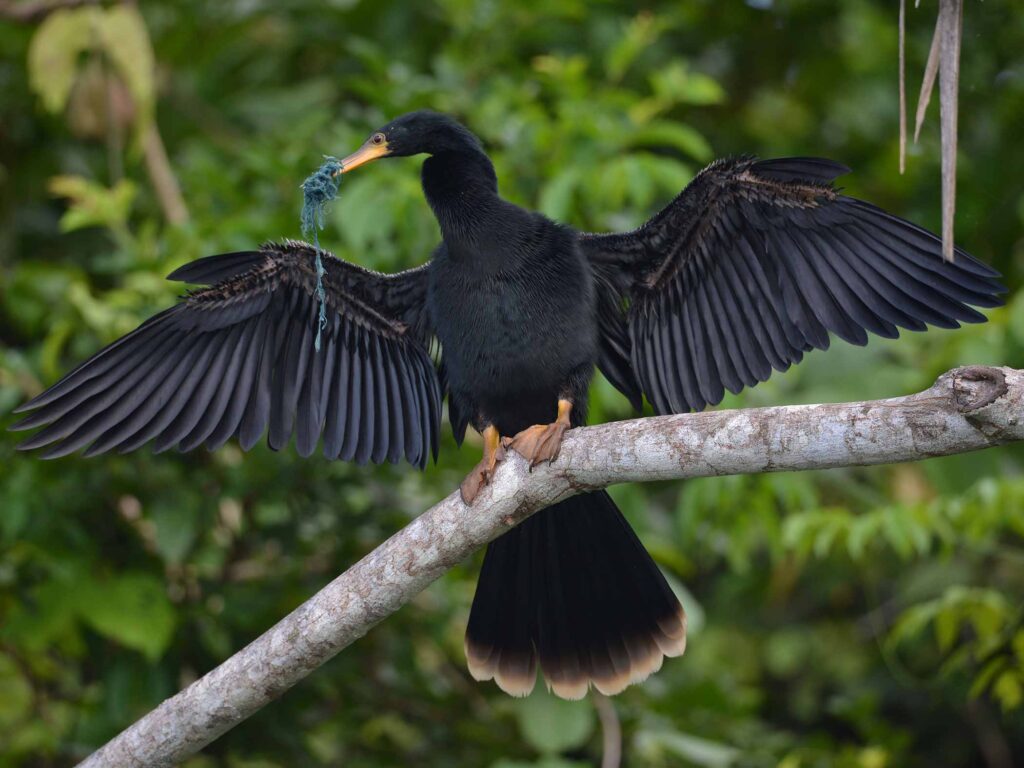
From the canopy tower, animals are no longer distant silhouettes. Flocks of White-Throated Toucans perch on adjacent branches, calling with high-pitched yelps. Inquisitive Black Spider Monkeys (Ateles chamek) swing gracefully through the emergent branches, mothers carrying infants on their backs with prehensile tails wrapped tightly around limbs.
Canopy Tower Highlights
- Eye-Level Bird Photography: Capture close-up portraits of cotingas, tanagers, puffbirds, and macaws without looking upward into bright backlighting.
- 360-Degree Amazon Horizon: Marvel at the sheer vastness of the primary rainforest stretching unbroken to the horizon in every direction.
- Morning Acoustic Panorama: Hear howler monkey troops, macaws, and cicadas waking up simultaneously across thousands of square hectares.
Safety and Accessibility
Canopy towers in Peru are built to rigorous structural engineering standards with high safety barriers, making them safe and accessible for travelers of all ages with reasonable fitness. Take your time during the climb, pause at resting platforms, and enjoy the most breathtaking view South America has to offer.