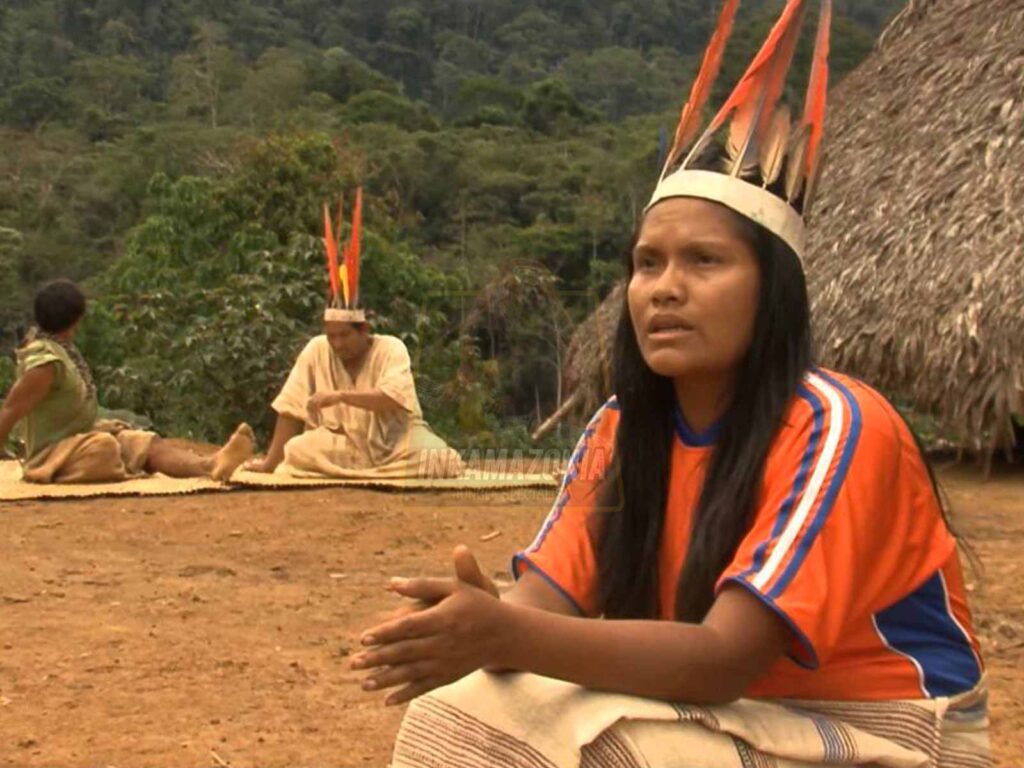



Too often, travel narratives treat the Amazon as an empty biological spectacle. In reality, the cultural heritage of indigenous peoples like the Matsigenka, Harakbut, and Yine is as rich and essential to the forest as the wildlife itself.
Welcomed with Warmth and Respect
Responsible tourism operators do not stage intrusive or commercialized ‘shows.’ Instead, community visits with Inka Amazonia are based on mutual respect, official community invitations, and fair economic partnerships.
Arriving at the native community of Shipetiari along the Alto Madre de Dios River, we were greeted by village elders dressed in traditional hand-woven cotton robes (cushmas). Sitting beneath the communal thatched maloca, we listened to stories translated from the native Harakbut language into Spanish and English, learning how their ancestors navigated the rivers long before the arrival of rubber barons or modern borders.
Living Botanical Knowledge
An elder accompanied us along a traditional ethnobotanical trail, demonstrating bow-and-arrow craft from chonta palm wood and extracting vibrant red pigments from achiote seeds to paint traditional protective facial motifs on our foreheads.
We learned how specific tree resins are burned as insect repellents, how lianas are harvested for emergency drinking water during droughts, and how community-managed agroforestry plots cultivate yuca, cacao, and bananas without cutting down primary canopy trees.
Principles of Respectful Community Tourism
- Ask Before Photographing: Always request permission before taking portraits of community members, particularly children and elders.
- Support Fair-Trade Handcrafts: Purchasing woven cotton bags, seed jewelry, and wooden carvings directly from artisans ensures income remains with families.
- Listen with Humility: Indigenous worldviews perceive the forest not as an exploitable resource, but as an extended family of sentient living beings.
Preserving Culture for Future Generations
Ethical tourism empowers indigenous youth to take pride in their ancestral language, folklore, and botanical science, demonstrating that ancient traditions possess immense value in our globalized modern world.